OUR APPROACH

Unlike traditional developers or financing providers, HEHP approaches housing projects as part of a broader institutional strategy. Many colleges and universities face housing needs at the same time they are managing financial pressures, enrollment changes, or operational constraints.
HEHP evaluates each opportunity within this larger context and, when appropriate, brings together a team of professionals with experience in higher education finance, administration, and institutional planning to help determine the best path forward. This may include institutional renewal efforts in addition to development and financing.
In certain situations, projects may also incorporate affordable or workforce housing components and may be structured to utilize public financing programs or other mission-aligned capital sources.
By structuring projects in this way, HEHP helps ensure that housing initiatives strengthen the institution rather than place additional strain on its financial or operational capacity.
OWNERSHIP MODEL
Ownership structure plays a central role in how housing projects are financed and managed. In many cases, traditional ownership models do not provide the flexibility needed to address institutional balance sheet constraints, financing limitations, or transaction complexity.
Higher Education Housing Partners may utilize nonprofit ownership structures, affiliated entities, or partnership arrangements to create a framework that allows projects to move forward while supporting the financial and operational needs of the institution. These structures can provide access to financing alternatives, allow for different risk allocations, and create solutions that may not be available through conventional development models.
Each project is evaluated individually to determine the ownership approach that best aligns the interests of the institution, the project, and the financing sources. Ownership structures may also be designed to accommodate public financing programs and mission-aligned capital sources, including structures that incorporate affordable or workforce housing components where aligned with institutional and community objectives.
FLEXIBLE FINANCING
Financing structures must be tailored to the specific circumstances of each project. Many housing and campus-adjacent real estate transactions cannot be completed using a single traditional source of capital. Institutions may have limited borrowing capacity, existing assets may require recapitalization, or the transaction may involve multiple parties with different objectives.
HEHP works to develop financing structures that may include traditional bank lending, tax-exempt financing, seller participation, developer partnerships, or other forms of mission-aligned capital. In certain situations, projects may also incorporate public financing programs, including tax credit structures, where aligned with project objectives.
The goal is to create a structure that allows the project to proceed while supporting the financial position of the institution and the long-term success of the asset.
INSTITUTIONAL PERSPECTIVE
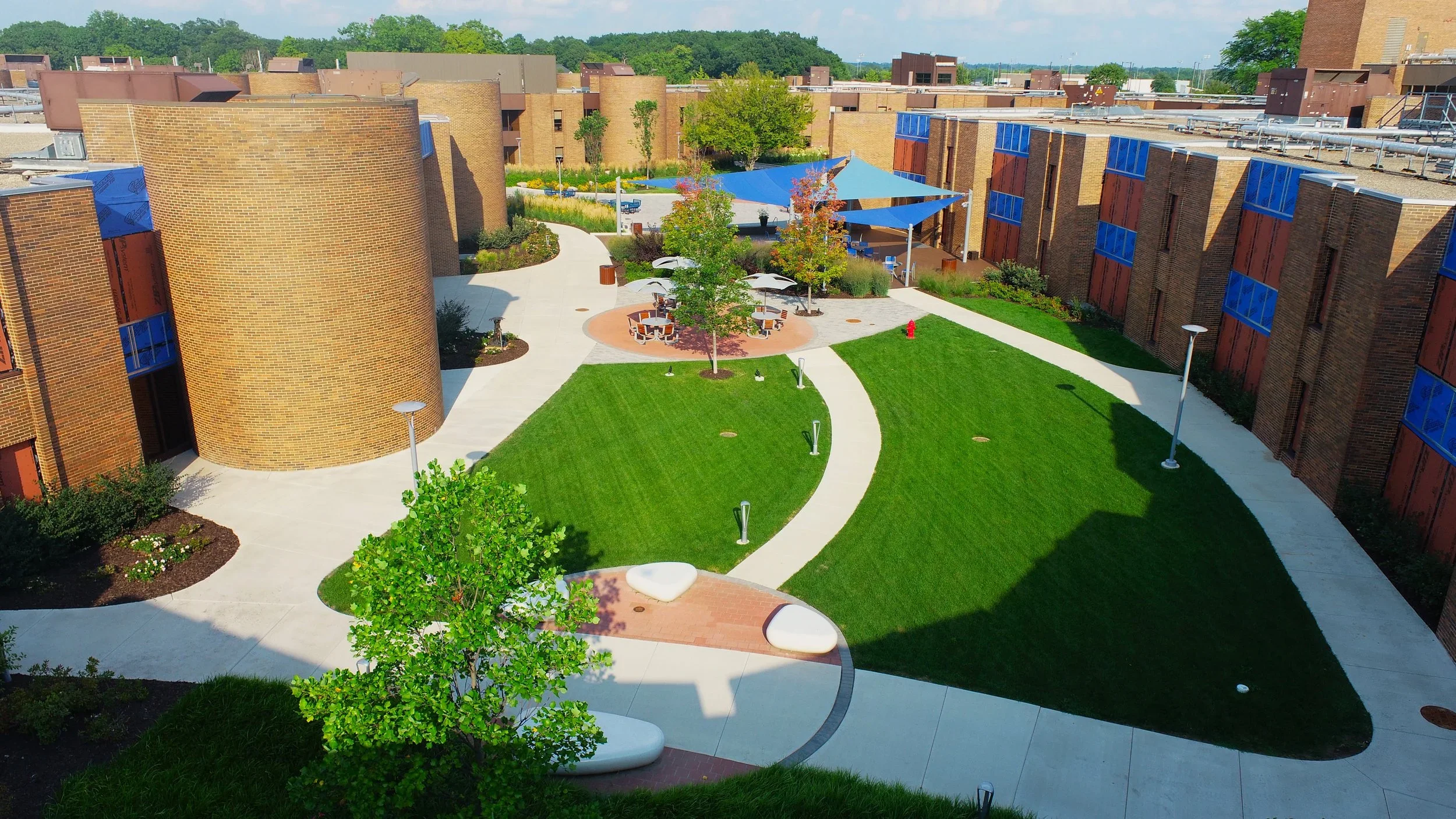
Housing projects do not occur in isolation from the institution’s overall financial and operational condition. Decisions related to student housing are often closely connected to enrollment trends, staffing levels, balance sheet capacity, and long-term strategic priorities.
HEHP brings an institutional perspective to each project based on extensive experience in higher education finance, administration, and consulting. In addition to development and financing expertise, HEHP may work with a team of professionals who can assist with institutional assessment, planning, and renewal efforts when appropriate. In some cases, these efforts help create the financial or operational capacity necessary for a project to move forward.
This broader perspective also allows projects that incorporate affordable or workforce housing components to be evaluated in the context of both institutional and community objectives.
By approaching projects in this manner, HEHP helps ensure that housing initiatives strengthen the institution’s position rather than create additional financial or operational strain.
WHEN HEHP MAY BE INVOLVED
HEHP may be involved in projects where housing needs intersect with broader financial, operational, or strategic considerations. In some cases, an institution wishes to develop new housing but must preserve balance sheet capacity or avoid additional direct borrowing. In other situations, an existing asset may require recapitalization, restructuring, or a change in ownership in order to remain viable.
HEHP may also work with developers, lenders, or investors seeking a nonprofit partner, particularly where flexibility in ownership or financing is required. In certain circumstances, projects may incorporate affordable or workforce housing components and may benefit from public financing programs or tax credit structures.
Because of these factors, each opportunity is evaluated individually to determine whether a nonprofit structure, flexible financing approach, or broader institutional strategy may provide a viable path forward.
AFFORDABLE & WORKFORCE HOUSING
HEHP may be involved in projects that incorporate affordable or workforce housing, particularly where such housing supports institutional objectives, including faculty, staff, and student populations.
These projects may involve the use of public-private financing structures, including tax credit programs, in partnership with experienced development and capital partners.
HEHP’s role may include project origination, institutional alignment, and participation in ownership and structuring alongside development partners.
Building housing solutions that support institutions long-term.
Higher Education Housing Partners, Inc. works with colleges, universities, developers, and lenders to develop and finance student housing and university-adjacent real estate using flexible ownership structures, nonprofit models, and institutional partnerships.